Tomahawk Steak: What It Is, Why It Costs More, and How to Cook It
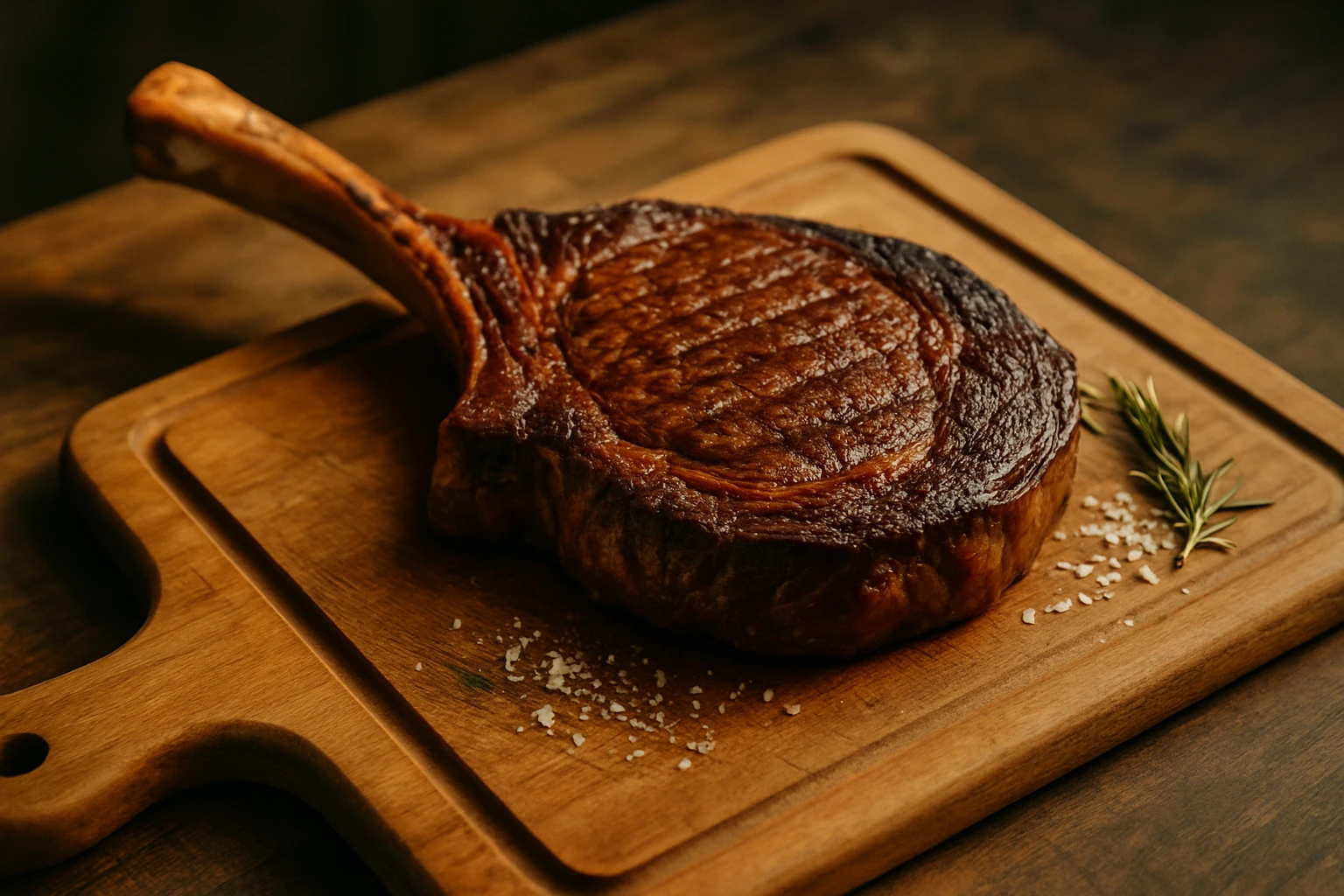
What Is a Tomahawk Steak?
A tomahawk steak is a bone-in ribeye cut with at least five inches of rib bone left intact and frenched — meaning the meat and fat between the bones are scraped away to expose clean white bone resembling the handle of a hatchet. The cut comes from the same primal rib section as any ribeye, typically between the sixth and twelfth ribs, and contains the same longissimus dorsi muscle that makes ribeye steaks tender and well-marbled. The signature feature is purely aesthetic: that long exposed bone adds no flavor to the meat itself but creates a dramatic presentation that commands attention on a plate or grill.
The typical tomahawk weighs between 30 and 45 ounces before cooking, though the bone accounts for roughly 200 to 250 grams of that weight. You’re paying ribeye prices — often premium ribeye prices — for bone that will be discarded after the meal. Understanding this trade-off matters when you’re comparing a tomahawk at $18 per pound to a boneless ribeye at $16 per pound: the actual edible meat cost is higher than the sticker price suggests.
Why the Bone Doesn’t Add Flavor
Countless steakhouse menus and cooking shows claim the bone enhances flavor during cooking. The science doesn’t support this. Bone is dense calcified tissue covered by a thin membrane called the periosteum. Neither conducts flavor compounds into muscle tissue during the brief high-heat cooking time required for steak. Molecular gastronomist Harold McGee and meat scientist Dr. Antonio Mata have both tested bone-in versus boneless cuts from the same animal and found no detectable flavor difference in blind tastings.
What the bone does provide is insulation. The meat nearest the bone cooks more slowly than the exterior, creating a gradient of doneness within the steak. Some eaters prefer this — a range from medium-rare at the bone to slightly more done at the edges — while others find it makes consistent doneness harder to achieve. The bone also retains heat after cooking, which means the steak continues to cook slightly longer during resting compared to a boneless cut.
The real reason bone-in steaks often taste better at restaurants has nothing to do with the bone itself: premium steakhouses typically reserve their best-marbled, longest-aged cuts for bone-in presentation because customers paying $90 for a tomahawk expect exceptional quality. You’re getting better beef, not bone magic.
Retail Pricing and Value Calculation
Tomahawk steaks occupy the top tier of grocery and butcher counter pricing. Retail prices vary by region and quality grade but generally range from $16 to $28 per pound for USDA Choice, with Prime grades reaching $30 to $45 per pound in major metro markets. Restaurant pricing adds significant margin — a 36-ounce tomahawk that costs the restaurant $25 wholesale typically appears on the menu between $85 and $140.
To calculate actual meat value, subtract bone weight before comparing prices. A 40-ounce tomahawk with a 9-ounce bone contains 31 ounces of edible beef. At $20 per pound, that’s $50 total or roughly $26 per pound of actual meat — comparable to a high-end boneless ribeye. The value proposition depends on whether the presentation justifies the premium. For a special occasion or social media moment, many buyers find it worthwhile. For regular weeknight cooking, boneless ribeye delivers the same eating experience at lower effective cost.
Some butchers sell “tomahawk-style” cuts with shorter bones (three to four inches instead of six to eight), reducing bone waste while preserving some visual impact. These represent better value if you want the look without maximizing non-edible weight.
How Tomahawk Differs from Cowboy Steak
The terms tomahawk and cowboy steak both describe bone-in ribeyes, but the bone length distinguishes them. A cowboy steak has two to three inches of bone remaining — enough to identify it as bone-in but without the exaggerated handle. Both cuts come from identical muscle, carry similar marbling, and cook the same way. The cowboy typically weighs 18 to 24 ounces versus the tomahawk’s 30 to 45 ounces, making it more manageable for a single diner.
Neither name has official USDA definition. They’re marketing designations that emerged from high-end steakhouses in the 1990s and 2000s. Some meat counters use the terms interchangeably or label any bone-in ribeye over 24 ounces a tomahawk regardless of bone length. When buying, confirm the actual bone length and total weight rather than relying on the label alone.
Cooking Methods That Work Best
The tomahawk’s thickness — typically 2 to 2.5 inches — eliminates simple stovetop cooking as an option. Attempting to sear a steak this thick in a pan without finishing in an oven results in a charred exterior and raw center. Three methods handle the size effectively:
Reverse sear: Season the steak and place it on a wire rack over a sheet pan in a 250°F oven until internal temperature reaches 115°F for medium-rare (about 45 to 60 minutes depending on thickness). Remove and rest for 10 minutes while you heat a cast-iron skillet or grill to maximum temperature. Sear 90 seconds per side until a dark crust forms. This method provides the most control over final doneness.
Direct grilling with two-zone setup: Build a hot charcoal fire or set gas burners to high on one side of the grill, leaving the other side unlit. Sear the steak directly over heat for 3 to 4 minutes per side, then move to the cool zone and close the lid. Continue cooking indirect until internal temperature reaches 125°F for medium-rare, typically another 15 to 25 minutes. The extended bone handle makes flipping easier than with boneless steaks.
Sous vide with finishing sear: Vacuum-seal the steak and cook in a 129°F water bath for 2 to 4 hours (longer doesn’t improve tenderness for ribeye’s already-tender muscle structure). Remove, pat completely dry, and sear on the hottest possible cooking surface for 60 to 90 seconds per side. This guarantees edge-to-edge even doneness but requires specific equipment.
All methods benefit from dry-brining: salt the steak liberally and refrigerate uncovered for 4 to 24 hours before cooking. This seasons the interior and dries the surface for better crust formation.
What to Expect at Restaurants
Steakhouse tomahawks are theater as much as food. Many arrive tableside on wooden boards with the bone wrapped in foil, sometimes with dry ice fog or flaming herb bundles. Servers typically present the cooked steak whole before taking it back to the kitchen for slicing — standard practice because the thick cut is difficult to portion neatly at the table.
Most restaurants price tomahawks for two diners to share, though portion sizing varies. A 36-ounce steak yields approximately 20 to 22 ounces of cooked meat after moisture loss, or 10 to 11 ounces per person when split — appropriate for one hearty or two moderate appetites depending on side dishes.
Restaurant preparation almost universally involves finishing bone-in steaks in high-temperature broilers after initial searing, reaching 800°F to 1200°F for rapid crust development. This isn’t replicable in home ovens, which max out at 500°F to 550°F. The result is a more pronounced char than most home cooks achieve. If you’ve only had tomahawk at steakhouses and found your home version disappointing, temperature differential explains most of the gap.
Making the Purchase Decision
Buying a tomahawk steak makes sense when presentation value matters — anniversary dinners, milestone celebrations, or content creation for food-focused social channels. The bone provides a built-in handle for dramatic plating and makes the cooked steak easier to hold steady while carving. These aren’t trivial benefits for specific use cases.
The cut makes less sense for routine meals where you’re optimizing cost per ounce of quality beef. A boneless ribeye from the same quality grade and same aging program delivers identical flavor and texture at 15 to 25 percent lower effective cost once you account for bone weight. The meat is the same; the price difference buys aesthetics.
If you want to try the cut without full commitment, some butchers sell half tomahawks — a bone-in ribeye with the full thickness but cut between two ribs rather than leaving the entire rib section intact. This reduces total weight to 18 to 24 ounces while keeping some visual interest, and it’s more practical for cooking equipment sized for standard steaks.
Read the pillar
Consumer Beef Education