Beef’s ‘Value’ Story Isn’t About Price — It’s About Justifying the Spend
Consumers choosing beef aren't looking for cheap — they're seeking return on investment through flavor, protein, and versatility.
Read more →Blog › Pillar · Spencer McLeod
Straight-talk answers to the beef questions people actually ask — from choosing a cut at the counter to hitting the right internal temperature, understanding USDA grades, and reading a nutrition label.
Beef.com's consumer-education pillar is a plain-English reference for anyone who wants to buy, cook, and eat beef with confidence. Each post is one question, one clear answer, with the source cited — no puff pieces, no marketing spin, no clickbait food photography that hides the answer three scrolls down the page.
Coverage spans four buckets: cuts (what to buy, how to identify it, what it does best), cooking science (heat, salt, resting, doneness, thermometers), nutrition (protein density, marbling and fat, sourcing labels), and buying guides (grade, freezer economics, portion planning). Question-led headlines and H2s help both readers and AI assistants find the exact answer to what they're asking.
This hub is Spencer McLeod's editorial anchor. Core reference material — USDA doneness temperatures, nutrition per 3-oz serving, grade definitions — is sourced from USDA FSIS and USDA FoodData Central and cited on each post. Techniques and buying advice reflect Beef.com's editorial judgment, not brand-partnership content.
Frequently asked
The best cuts for grilling are well-marbled steaks like ribeye, New York strip, and sirloin — they cook fast over direct heat and stay tender. For thicker cuts over 1.5 inches, use a two-zone fire: sear over direct heat, then finish over indirect heat until the internal temperature reaches your target doneness.
USDA grades beef by marbling — the intramuscular fat that drives flavor and tenderness. Prime is the top ~2% of graded beef with abundant marbling. Choice covers about 55% of graded beef with moderate marbling. Select is leaner with less marbling. Ungraded beef carries no USDA quality grade at all.
Medium-rare is 130-135°F (54-57°C) at the thickest part of the steak. Pull the steak from heat about 5°F below your target — carryover cooking will bring it up during rest. Use an instant-read thermometer inserted into the thickest part of the meat, away from bone or fat.
Plan for 6-8 ounces of raw beef per person for main-course cuts like steaks and roasts. For dishes where beef is not the centerpiece — stews, stir-fry, tacos, chili — 4 ounces per person is enough. Buy 25% extra if you are serving heavy eaters or want leftovers.
Grass-fed beef is leaner overall, contains slightly higher omega-3 fatty acids, and has more conjugated linoleic acid (CLA) than grain-fed. Grain-fed beef is more marbled and typically more tender. Both are excellent complete-protein sources; the nutritional difference is real but modest, and the choice mostly comes down to flavor, texture, and how the cattle were raised.
Resting lets juices that migrated toward the center during cooking redistribute back through the muscle fibers. Cut a steak the moment it comes off heat and juice runs out onto the plate; rest 5-10 minutes (depending on thickness) under loose foil and the juice stays in the meat, keeping the cut moist without steaming the crust.
A 3-ounce cooked serving of lean beef contains about 25 grams of protein — roughly half the average adult daily target — plus significant iron, zinc, vitamin B12, and selenium. Beef is a complete protein, meaning it delivers all nine essential amino acids the body cannot synthesize on its own.
Ground chuck (about 80/20 lean-to-fat) is the classic burger blend — flavorful and juicy. Ground round (about 85/15) is leaner and better suited to meatballs, meatloaf, and dishes with added moisture. Ground sirloin (about 90/10) is the leanest of the three — best for tacos, chili, and pasta sauces where excess fat is not wanted.
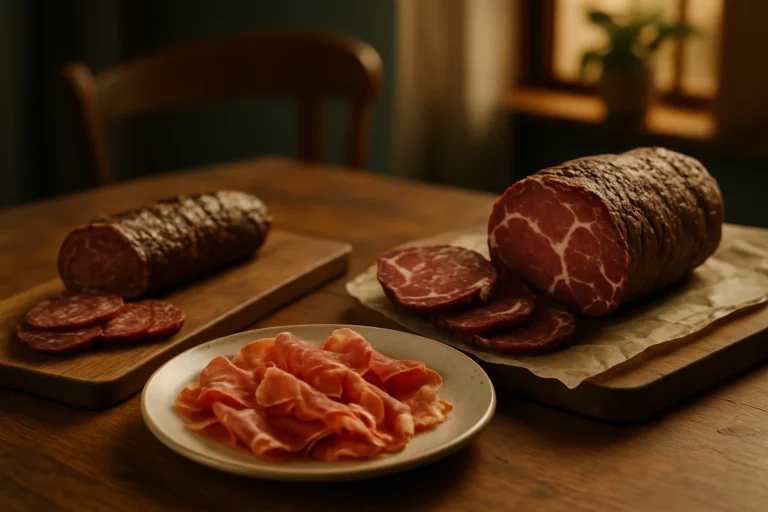
Consumers choosing beef aren't looking for cheap — they're seeking return on investment through flavor, protein, and versatility.
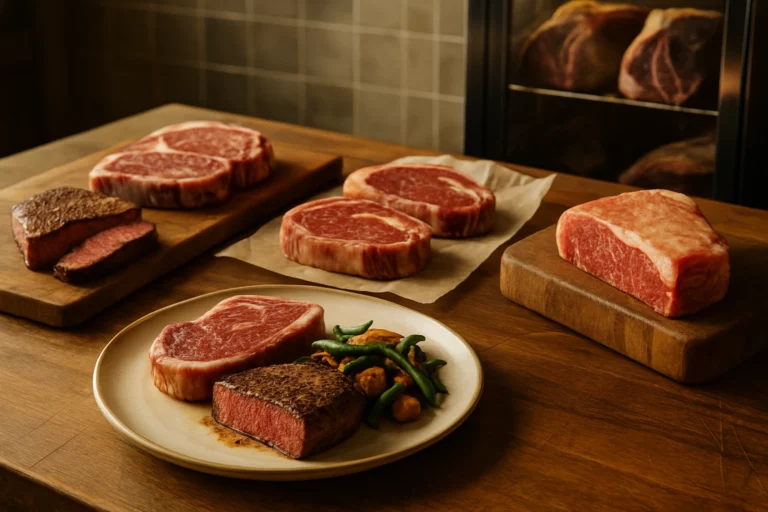
Read more →Changing eating habits signal a meal-occasion gap for beef. If consumers want no-cook, shareable formats, beef needs product innovation to match.
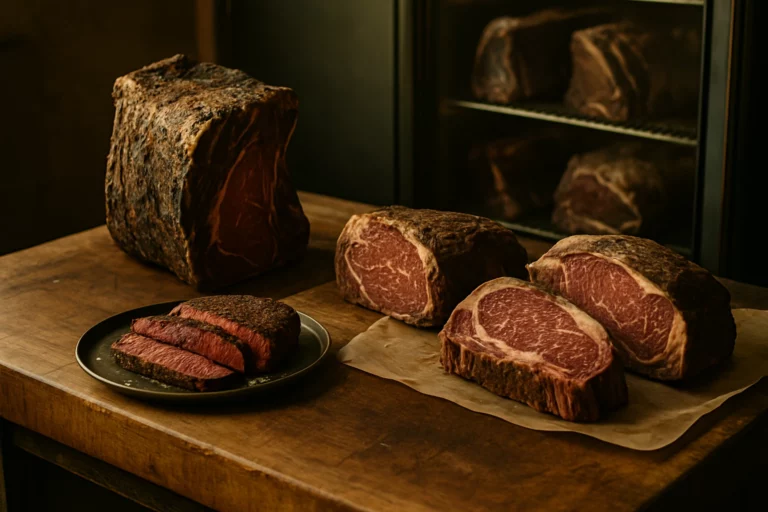
Read more →Dry aged beef undergoes controlled decomposition for 14 to 120 days, concentrating flavor through moisture loss and enzymatic breakdown while developing signature funky, nutty notes.
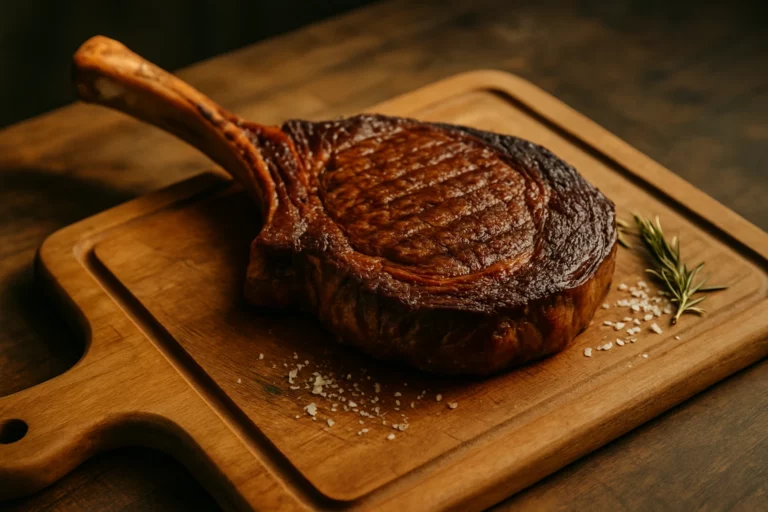
Read more →A tomahawk steak is a bone-in ribeye with an extended rib bone, prized for presentation and flavor but carrying a premium price for bone weight you won't eat.
Read more →